
Thoughts on the Maldon salt scandal.
Let's talk about making sea salt.
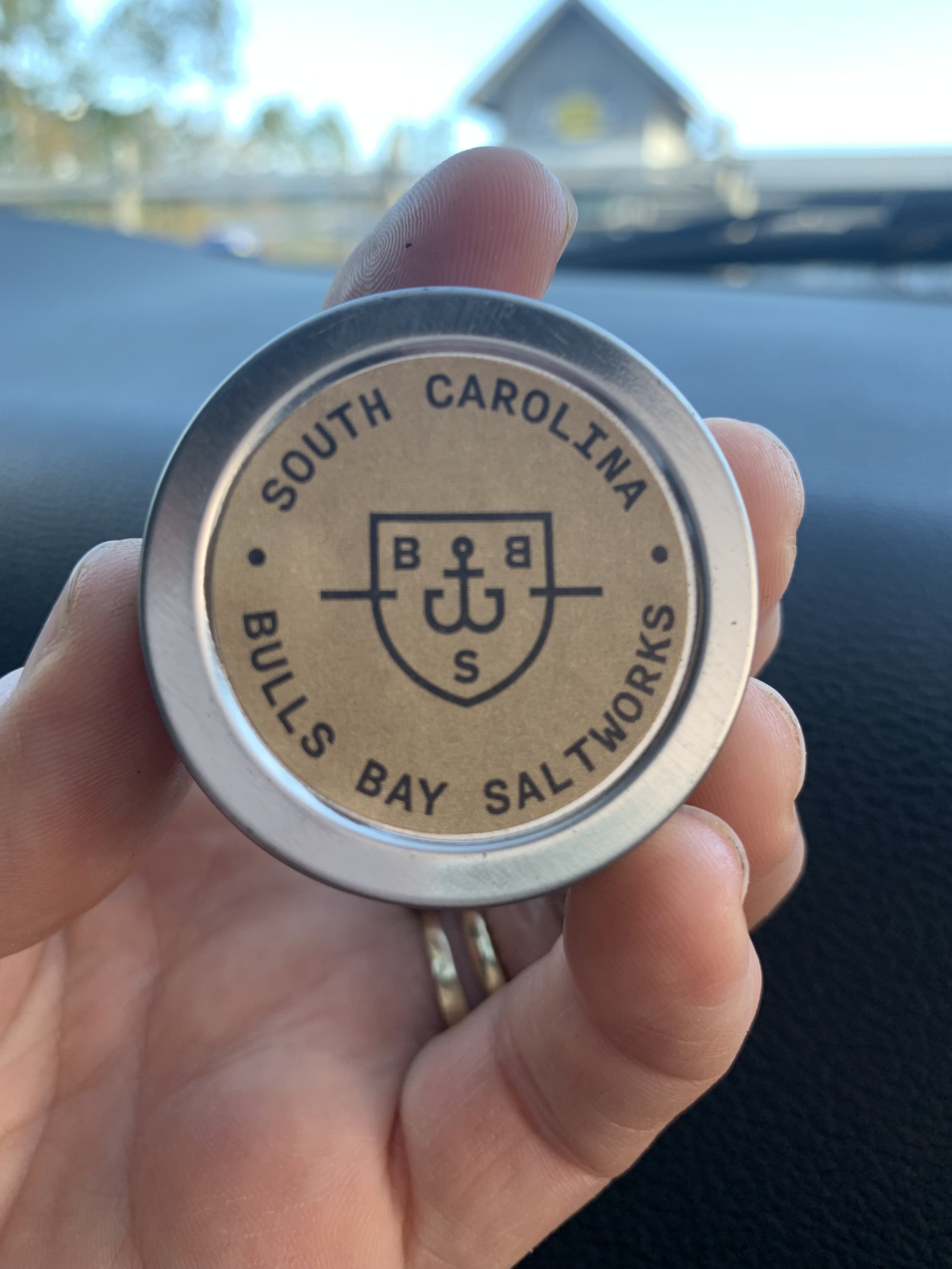
When I started Bulls Bay Saltworks in 2012, I was shocked to learn that our business would be labeled as a salt and spice manufacturer by our local and federal government. I had been growing and selling vegetables to our local community here in McClellanville and to our local food hub in Charleston, Grow Food Carolina. It felt natural and easy to add sea salt to the menu of offerings.
As I navigated the waters of becoming a “manufacturing” company, I was shocked at the level of government oversight suddenly required for my new business to function. “It’s salt”, I thought, the world's oldest ingredient. Why can’t we just grow it and sell it like vegetables?
Here in the USA, when culinary sea salt is packaged for sale, it has to be inspected. The South Carolina Dept. of Agriculture and the FDA arrive regularly to observe us working and monitor each stage of production. The manufacturer designation comes with code books listing food processor rules that are far more strict than for a farmer selling their chicken eggs. With a ruler and a magnifying glass the labels are inspected. “The font size of the Net Weight line needs to be two millimeters taller…”, is one of the many corrections we’ve had to make to labels before going to print. Another demand by our inspector was to change our ingredient “list” from “sea salt” to “solar-evaporated sea salt”. Yes, the latter sounds better but the real estate on the label was a tight market and all these label demands require labor, time and energy.
Imported food has a much more lenient entrance to our country, stores, and kitchens as seen in this example with Maldon's simple “sea salt” ingredient. But in this case, salt is an additive to another salt. Transparency is what is required for consumers to make their own calculated choices.
Years ago, I had a company request to use our brand and name on their packaging even though they didn’t intend to use our actual salt in the product. It was pitched to me as a win-win. I was floored at the audacity of the request and quietly pointed out that in addition to not “winning” by selling our product to them, we wouldn’t “win” from having anyone taste an inferior salt thinking it’s ours. You can know your food by knowing your farmer, this can be important in the future.
Growing culinary sea salt crystals and flakes is an art, and just like anything else we learn to do, we can continue to grow our expertise over years, decades or even a lifetime. In nearly 15 years as a sea salt farmer I have learned that a slow and intentional approach is going to yield the finest, finished product. This is why we’ve remained a tiny company, so far. It’s why we didn’t “sell out” by taking on investors to meet demand and instead had to grow comfortable with expanding as we can, sometimes saying no, and focusing on always improving what we already do very well. (That said, we’ve been pondering what a partnership would look like and believe there’s an angel investor out there who wants to support us in creating a Third Space for budding entrepreneurs here in MCLV!).
Sea salt weighs over 8 pounds per gallon (3.63 kilos). For reference, under ideal conditions, we harvest about 3 ounces (85 grams) of salt per gallon of seawater we evaporate. We can haul 1,000 gallons of water at a time, each of our 84’ greenhouses hold over 5,000 gallons at once in various stages of evaporation. Two additional 1,500 gallon water tanks hold reserves as insurance against a heavy rainfall that can lower the salinity of the bay. I’ve always wondered how salt companies do it that are not located right near their water source.
How can you tell if the sea salt is worth the weight? Where is the water collected? Would you freeze ice for your sweet tea from puddle water? Then you likely wouldn’t use unknown sea water to make edible salt. It’s not that there’s an additive, it’s that the salt additive to Maldon’s process is unknown. It’s the concealment of the source that is the problem, not necessarily the additive itself.
How far is the sea water transported for evaporation? Does the size of the company and the quantities they produce jive? It’s impractical to haul large quantities of water long distances and would certainly drive up the cost of the finished product tremendously. Is the company even doing business in the town where their PO BOX is? Are there co-packers in another state requiring additional oversight? For example, if we collected our sea water here from Bulls Bay but hauled it to Florida for evaporation, we would need to be inspected by both states. Even hauling our salt to another state to be packaged would include dual inspections.
At the end of the day, people like what they like. Maldon has a fantastic reputation for their big beautiful flakes. If it's the look and the texture that appeals to you, keep buying what you love! When we grow our pure flake salt we actually steer away from achieving the firm diamond shaped flakes by carefully separating the water just before the flakes form, removing the bitterness that will bind to the salt if it’s rushed and boiled.
Pure. Wild. Rare.